
We’ve set up one of Western Australia’s first place-based, community-led Indigenous data units – putting Indigenous Data Sovereignty into practice on the ground.
The Ieramugadu Data Project ensures Roebourne Ngarda-ngarli are the ones in control of managing, sharing and collecting data that impacts their lives. For decades, government and industry have collected large volumes of data on Roebourne Aboriginal people. Having our own Data Unit changes things, placing data back in community hands.
The Ieramugadu Data Project is about Ngaarda-ngarli in Roebourne asking our own questions, having control over our own data, and telling our own stories.
With strong local data – we will be able to see what’s working and what’s not working in our community. And we’ll be able to use that data to make our own decisions and make changes for the better.
Our Vision
For Roebourne Aboriginal people to have full control of, and access to, their own data — driving informed decision-making and self-determination and ensuring external investment, policy and services are shaped by community need and priorities.
Who Are We?
This project is for community, led by community. Operating via a multi-layered governance structure, we ensure that the Ieramugadu Data Unit remains community-led and culturally-grounded. This structure includes a team of Community Researchers, a dedicated community Data Governance Committee, direct reports to the NYFL Board of Directors and partnership with the local Elder’s Council and Service Provider Network. Industry and government partners are also supporting this work through funding, advocacy efforts and data sharing arrangements..

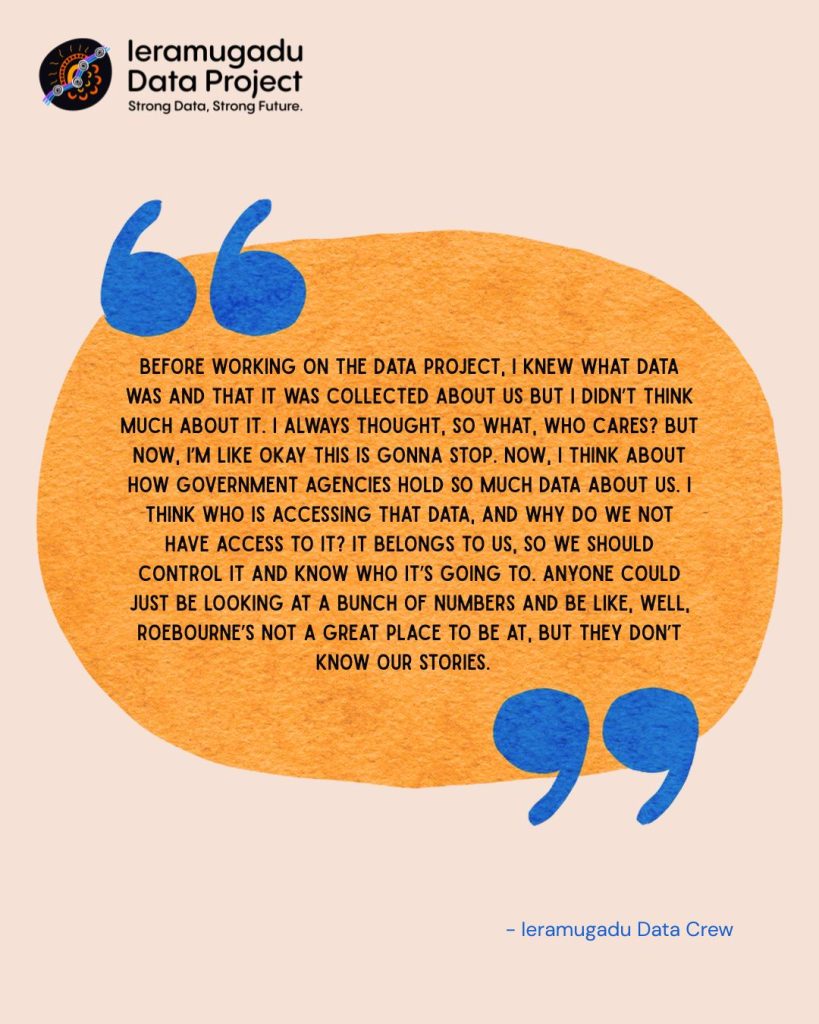
“Indigenous data refers to information in any form that is about Indigenous people or impacts our lives.”
Indigenous data can be:
The Need For data
The Pilbara generates over $125 billion in annual economic output, yet Roebourne ranks among Australia’s most disadvantaged areas, with an estimated 87% of Indigenous individuals reporting a weekly income below the national median of $805*. Despite these entrenched inequities, Roebourne Ngarda-ngarli (Aboriginal people) remain resilient and determined — but to drive the change they want to see, they need data.
* Ieramugadu Data Unit analysis using data from the Australian Bureau of Statistics, Socio-Economic Indexes for Areas (SEIFA) and Census of Population and Housing, 2021.
What is Indigenous Data Sovereignty?
Indigenous Data Sovereignty is a global movement led by First Nations peoples that promotes the right of Indigenous peoples to exercise control and ownership over data that is about them and impacts their lives. It is about ensuring data works for us, not against us.
Doing work in Ieramugadu?
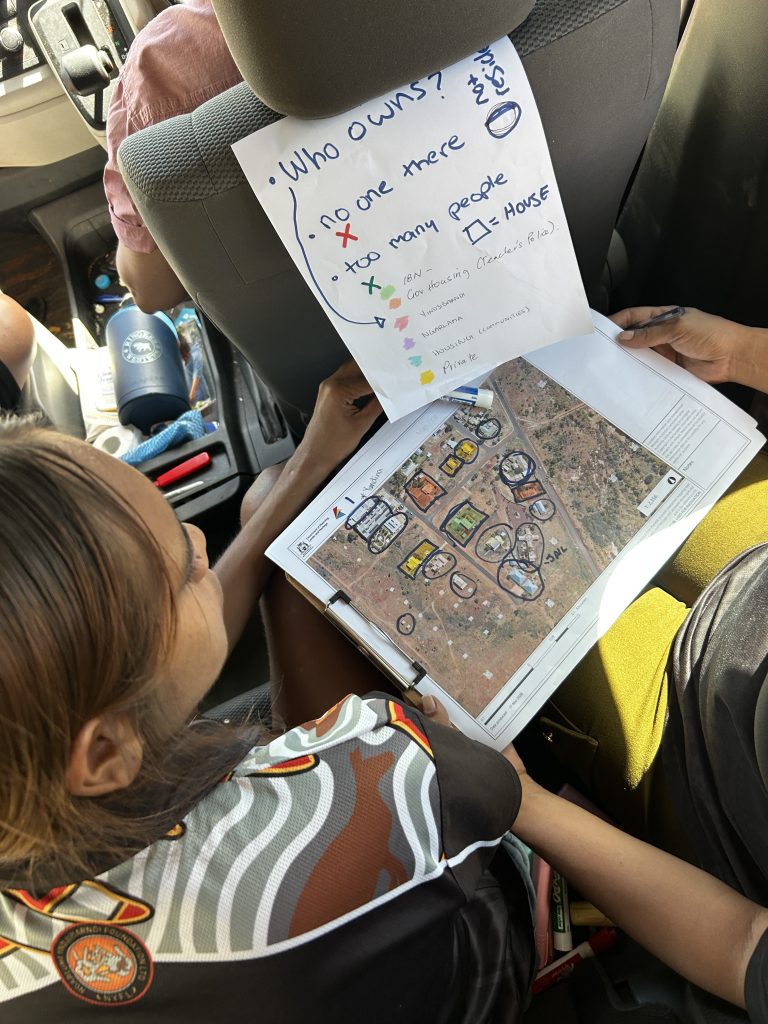
Roebourne is often referred to as one of the most consulted and researched Aboriginal communities in Australia due to our close proximity to resource projects. However, we are rarely involved in instigating or leading these processes, and often the resulting information is owned and used by others and not shared back to community.
We’ve developed a Statement of Respect for Aboriginal Knowledge, Information, Culture and Data to ensure that engagement benefits Ngara-ngarli, respects their knowledge and time, and is conducted in line with Indigenous Data Sovereignty principles. This statement applies to any engagement, research, consultation or collaboration in which community knowledge, information, data or experience is drawn upon.
NYFL welcomes early conversation with prospective partners about how these principles apply to their project.
Do you Need Data?
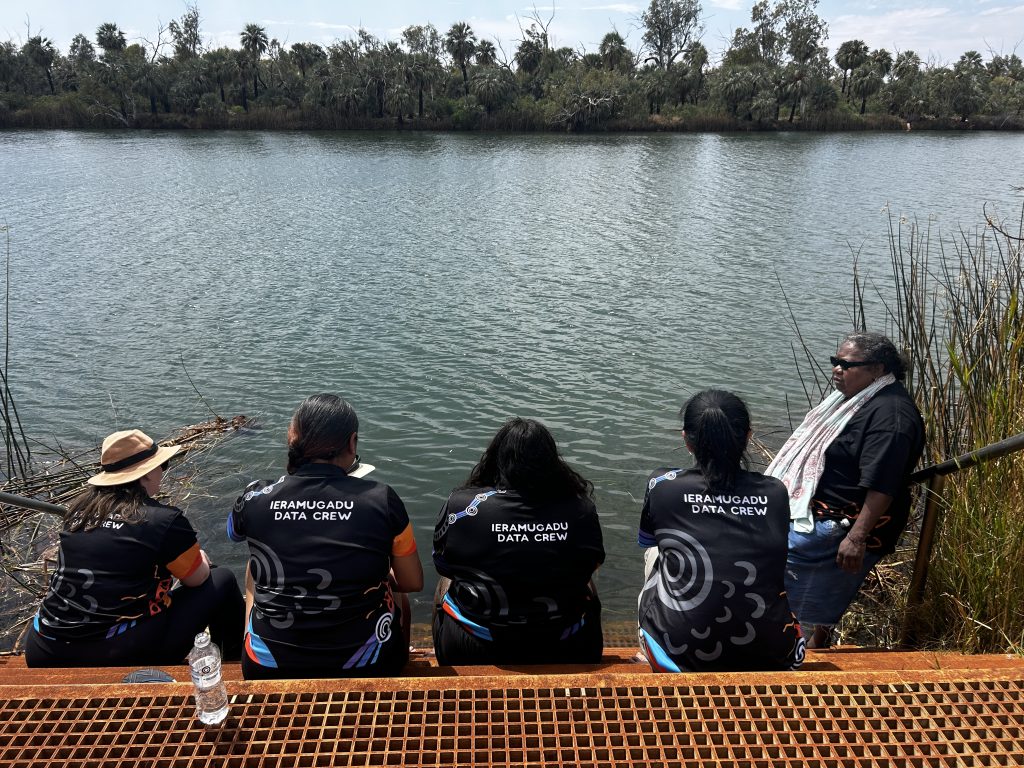
Our current priority is building a picture of where things are at for Roebourne Aboriginal people and how things have changed over time. We’ve been collecting our own, community-led data and working with industry, government and service providers to get access to existing data on our community.
Data held by Ieramugadu Data Project is on behalf of, and for the benefit of, Roebourne Ngarda-ngarli. Whilst we’re not set up to share data just yet, in the future, community members, organisations and external partners will be able to request access to data held by the Ieramugadu Data Unit to support their work, such as de-identified population level statistics and data sets.
If there is data you currently need to inform your work, let us know! This helps us understand what data is needed to drive change in Ieramugadu. We’ll also get in touch with you when the requested data becomes available.
